
Urgent Update: Temporary Adjustment to Fuel Surcharges
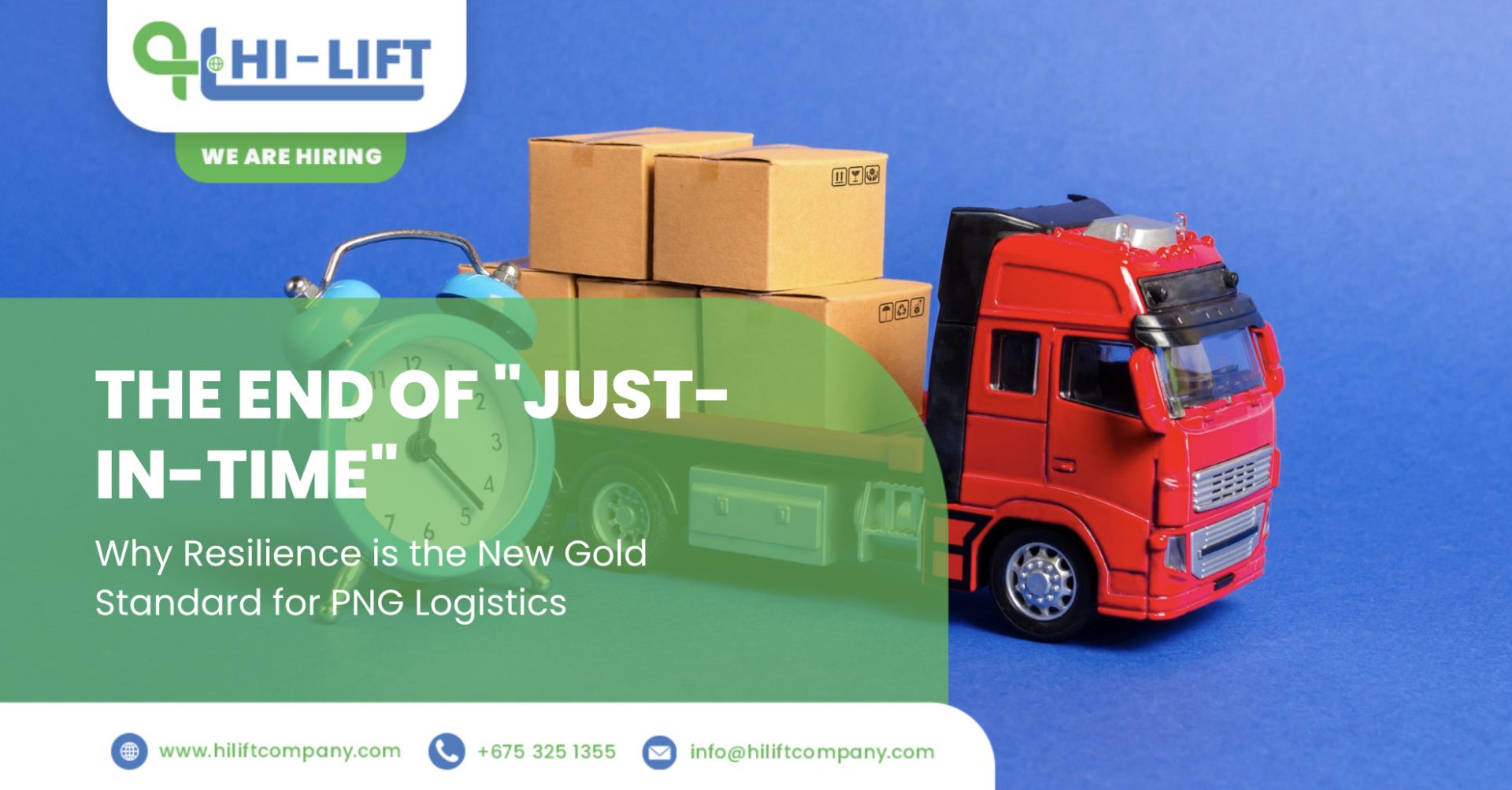
For decades, the global supply chain mantra was simple: make it lean, make it fast, and keep inventory at zero. We called this “Just-in-Time” manufacturing. It worked perfectly—until it didn’t.
The world has changed. The predictable rhythms of global trade have given way to a new reality defined by pandemics, geopolitical instability, and shipping lane disruptions. In this volatile environment, the old strategy of waiting until the last minute to order critical supplies is no longer a cost-saving measure; it is a liability.
Today, smart businesses are making a decisive pivot. They are moving from “Just-in-Time” to “Just-in-Case.” For companies operating in Papua New Guinea, this shift isn’t just a trend; it is a survival strategy.
The High Cost of Empty Shelves
We see the impact of fragile supply chains everywhere. When a global shipping line delays a vessel, it doesn’t just mean a late package. For a mine in the Highlands or a major retailer in Port Moresby, it means downtime.
In the mining sector, the cost of a stopped conveyor belt or a grounded haul truck runs into the thousands of Kina per hour. Under the old model, you relied on a part arriving exactly when you needed it. But when the global chain breaks, that part sits in a container in Singapore or Brisbane while your operations grind to a halt.
This is why resilience is now the most valuable currency in logistics. Resilience means having options. It means having a buffer.
Warehousing: Your Strategic Safety Net
At Hi-Lift, we see this shift happening in real-time. Our clients are no longer asking, “How fast can you get it here?” They are asking, “How much can we keep here safely?”
This is where the true value of local warehousing comes into play. By holding stock locally in Port Moresby or Lae, you eliminate the uncertainty of ocean freight from your daily operations. You move your inventory closer to the point of consumption.
We are actively helping our clients transform warehousing from a simple storage cost into a strategic asset. Our bonded storage facilities allow businesses to bring in goods without immediately paying duties, keeping cash flow healthy while ensuring stock is on hand. When you hold more inventory locally, you buffer your business against global shocks. You control your own destiny, rather than waiting on a ship that might be weeks away.
Contingency Logistics: The “Critical Spare” Strategy
The most vital aspect of this “Just-in-Case” approach is what we call contingency logistics. This is about identifying the single points of failure in your operation—the critical spares, the essential consumables—and ensuring they never run out.
Imagine a critical pump fails at a remote site. If you rely on international airfreight, you face customs delays, flight schedules, and weather interruptions. But if you store that pump in Hi-Lift’s managed warehouse in Lae, we deploy it immediately. You turn a potential week-long crisis into a same-day solution.
Building a Fortified Future
The era of lean inventory is over for now. The companies that will thrive in PNG’s challenging environment are the ones that plan for the unexpected. They prioritise availability over extreme leanness.
At the Hi-Lift Company, we do more than just move cargo; we help you build a fortress around your supply chain. Whether you need to expand your stockpile of mining consumables or ensure retail shelves stay full during peak season, we provide the infrastructure you need to adopt a “Just-in-Case” mindset.
Don’t wait for the next disruption to reveal the cracks in your supply chain. Strengthen your position now, hold the stock you need, and let Hi-Lift handle the logistics of resilience.
- Speak to a HIlift Specialist: Visit our Contact Us to discuss your specific hazardous cargo requirements.
- Stay Informed: Follow us on LinkedIn for the latest safety updates and industrial logistics trends in PNG.
